Strengthening Uganda's DMS capacity on AI-powered rainfall forecasts
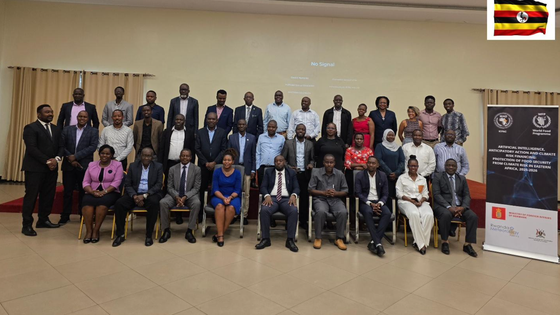
ICPAC and Uganda's Department of Meteorological Services held a five-day in-country training in Entebbe (2–6 November 2026) on running and evaluating the cGAN machine-learning rainfall model against local observations, and on what its operational use would require.

Turning machine-learning potential into practical forecasting skills
Artificial intelligence is creating new opportunities to improve the detail and local relevance of weather forecasts. For national meteorological services, however, the value of these approaches depends on more than their technical potential. Forecast products must be tested against local observations, assessed under different weather conditions and considered in relation to the systems used by forecasters.
To support this process, the IGAD Climate Prediction and Applications Centre (ICPAC), in collaboration with Uganda's Department of Meteorological Services (DMS), conducted a five-day in-country training on the evaluation of the Conditional Generative Adversarial Network (cGAN) model in Entebbe, Uganda, from 2 to 6 November 2026. The training brought together forecasters, meteorologists, climate scientists, data analysts and IT specialists to build practical capacity in training, running, assessing and interpreting machine-learning-based rainfall forecasts.
The cGAN model is designed to enhance the spatial detail of numerical weather prediction products and support the generation of locally relevant rainfall information. The training therefore focused on evaluating how the model performs under Uganda's conditions and identifying what would be required for its potential use in national forecasting operations.
A hands-on approach to model application
The programme combined technical presentations with guided practical sessions and group work based on selected Uganda forecast cases. Participants were introduced to the cGAN workflow, including the computing environment, Python and Jupyter Notebook setup, repository navigation and model execution. They then worked with ECMWF Integrated Forecasting System (IFS) forecast inputs, preparing selected dates and lead times and carrying out quality checks before generating cGAN outputs.
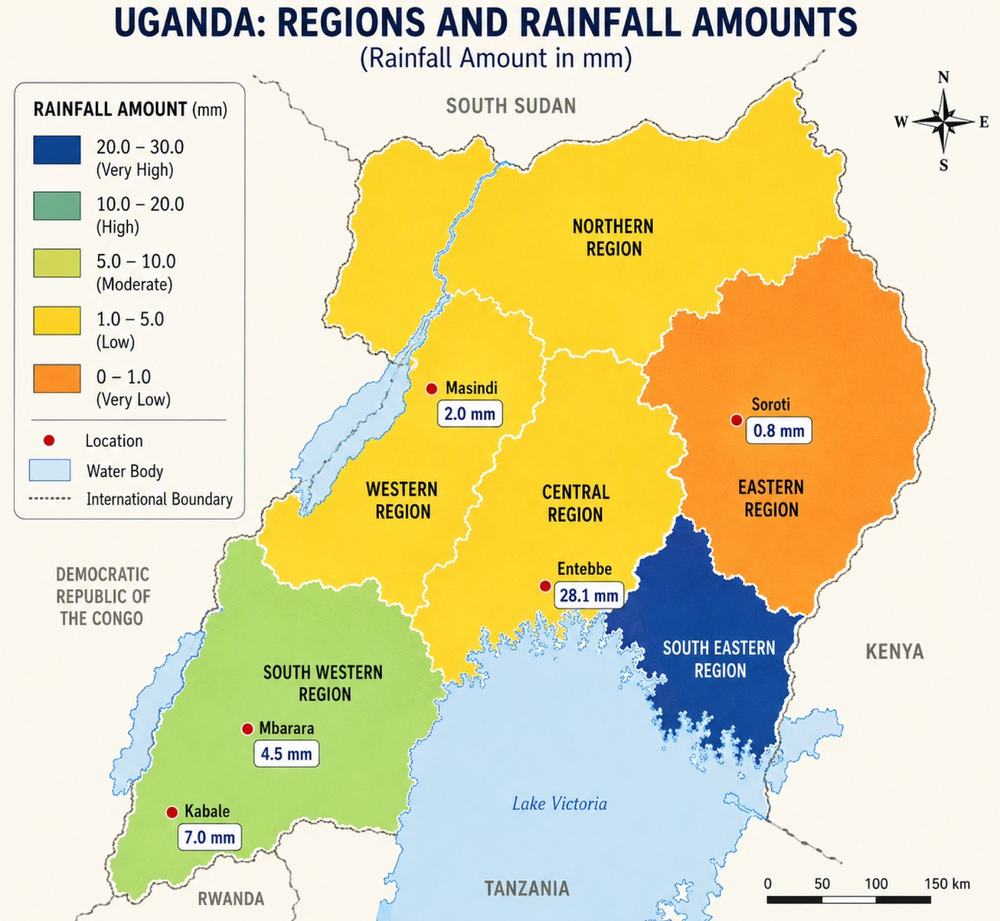
Practical exercises covered the generation of ensemble members, rainfall maps and exceedance-probability products. Working groups explored forecast cases for different parts of Uganda, creating opportunities to consider how rainfall patterns and forecast performance may vary across geographical areas and seasons.

Evaluating forecasts against observations
A central component of the training was the verification of cGAN outputs against available observational datasets. Participants examined the use of DMS station observations and satellite-derived rainfall estimates, including IMERG, CHIRPS and RFE, while considering the strengths and uncertainties associated with different reference datasets.
The practical evaluation introduced measures such as correlation, mean error, root mean square error, probability of detection, false alarm ratio and equitable threat score. Participants also considered performance across rainfall thresholds, forecast lead times, seasons and geographical areas, subject to data availability.
The programme further examined how cGAN-generated forecasts compare with raw ECMWF IFS products and other available downscaling approaches. Specific attention was given to rainfall occurrence, spatial distribution, intensity and the representation of heavy-rainfall events.


Linking technical evaluation to operational needs
Beyond model performance, discussions considered the practical requirements for routine use within a national meteorological service. These included data dependencies, computing resources, processing time, storage and staffing, as well as opportunities to incorporate cGAN products into forecasting bulletins, warnings and anticipatory action.
A site visit to DMS provided an opportunity for engagement on the national forecasting office, operational numerical weather prediction and data systems, and the computing infrastructure that could potentially support the cGAN workflow. This helped connect the technical work undertaken during the training with the institutional and operational context in which forecast products are produced and used.


Building evidence for the next steps
The training was designed to strengthen national capacity to run and evaluate the cGAN model and to generate forecast products that can be assessed against observations and existing numerical weather prediction products. The planned outputs included evaluated cGAN forecast products, a technical evaluation report documenting performance, strengths, limitations and uncertainties, recommendations for further testing and model improvement, and a follow-up evaluation plan.
The experience reflects ICPAC's continued work with national meteorological services to strengthen technical capacity and support the assessment of innovative forecasting approaches for the Greater Horn of Africa. Continued evaluation using additional forecast cases and independent observational datasets will be important in determining the model's suitability for operational application and identifying where further refinement and technical support may be needed.