Uganda's Meteorological Services Embrace AI to Strengthen Early Warning Systems
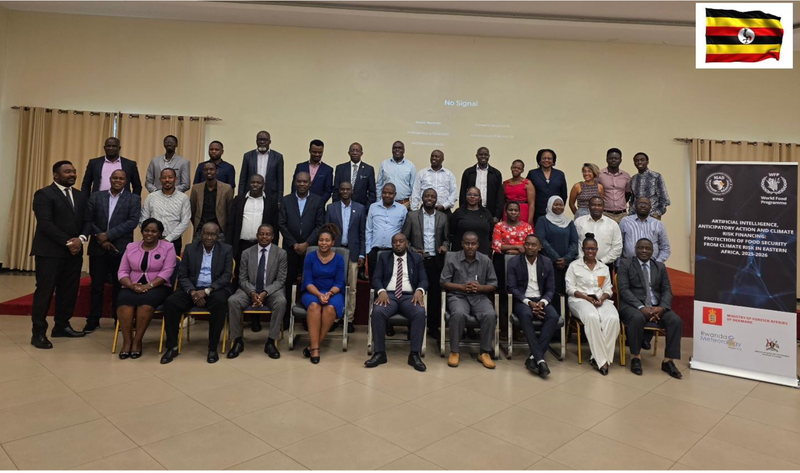
The Department of Meteorological Services (DMS) in Uganda, in collaboration with ICPAC and WFP, hosted a landmark five-day workshop from 23rd to 27th February 2026 to advance the use of Artificial Intelligence and Machine Learning in weather forecasting and climate services.
Building Technical Capacity in AI-Driven Forecasting
The first two days were held at DMS offices in Kampala, where forecasting and data teams received hands-on training in climate data evaluation, forecast verification, and machine learning post-processing methods. Led by ICPAC and the University of Oxford, participants worked in small teams developing scripts for evaluating forecast model performance using metrics such as Bias, Root Mean Square Error (RMSE), and Mean Absolute Error (MAE).
A key focus was the Conditional Generative Adversarial Network (CGAN) model, which improves forecast accuracy by correcting systematic biases and enhancing the spatial detail of rainfall predictions. Participants were introduced to the model's structure, training dataset preparation, and approaches for evaluating AI-generated forecasts.
Cross-Sector Stakeholder Engagement
The remaining three days moved to Entebbe, where representatives from government ministries, academia, and development partners came together for stakeholder engagement sessions. Breakout groups covered climate-sensitive sectors including agriculture, disaster risk reduction, health, transport, water resources, and environment.
From Reactive Response to Anticipatory Action
The keynote address underscored how AI can shift institutions from reactive disaster response toward anticipatory action — enabling earlier interventions that reduce climate-related risks. By identifying patterns in large climate datasets and linking forecasts to sector-specific impacts, AI-enhanced systems can fundamentally improve decision-making across Eastern Africa.
Looking Ahead
The workshop concluded with clear recommendations: continue building technical capacity at DMS, strengthen climate data infrastructure through digitization, and deepen collaboration between government institutions, academia, and development partners. Continued stakeholder engagement will be essential to ensure AI-enhanced forecasts are effectively integrated into early warning systems and anticipatory action frameworks across the region.