Sustainability Planning for AI-Driven Forecasting at Ethiopia's Meteorological Institute
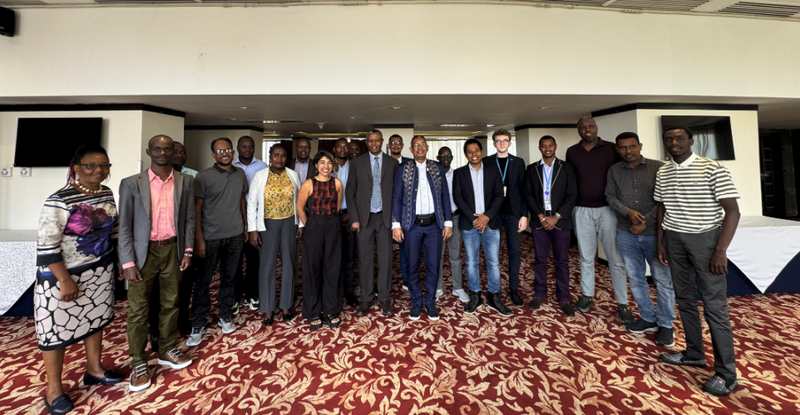
As part of the SEWAA project supported by Google.org, a five-day workshop was convened in Addis Ababa, Ethiopia from 15th to 19th December 2025, bringing together WFP, ICPAC, Oxford University, ECMWF, and national meteorological agencies from Ethiopia, Uganda, Rwanda, and Madagascar to plan the long-term sustainability of machine learning-based forecasting products.
From Pilot to Operational Integration
The Conditional Generative Adversarial Network (CGAN) model has demonstrated significant improvements in short-range rainfall forecasting accuracy, particularly over southern Ethiopia. But as participants acknowledged, technical success alone is not enough — long-term impact depends on institutional ownership, operational integration, sustainable financing, and alignment with government systems. The workshop marked a deliberate shift from pilot implementation to mainstream adoption within public sector operations, focusing on finalizing an operational integration roadmap for the CGAN model at EMI.
Key Themes and Outcomes
Several critical themes emerged across the sessions:
- CGAN Operational Integration: The team reviewed improvements in the CGAN model and emphasized the need to embed it fully into EMI's daily forecasting workflow, supported by standard operating procedures and routine validation.
- Capacity and Data Challenges: Participants identified capacity gaps, the need for continuous technical training, and the importance of strong data governance to sustain AI/ML operations.
- Regional Knowledge Exchange: Uganda, Rwanda, and Madagascar shared their progress in AI/ML adoption, highlighting data rescue efforts, digital transformation, and institutional readiness — fostering valuable south-south collaboration across the Greater Horn of Africa.
- SEWAA Platform Review: ICPAC and Oxford demonstrated the SEWAA website prototype, with participants recommending improved visualization, threshold-based products, and user-focused interfaces.
- Hands-On Forecast Generation : In a practical exercise, the team downloaded CGAN outputs and IMERG rainfall data, processed them together, and successfully generated forecast products for June 2025 for Ethiopia — strengthening understanding of the complete workflow from data access to final forecast interpretation.
A Shared Vision for the Future
Participants agreed on a collective vision: a future where African national meteorological services operate modern, impact-driven, and user-centered early warning systems powered by scalable and nationally embedded AI/ML solutions. The workshop laid the foundation for this future — one built on collaboration, shared learning, and the determination to ensure that technological progress translates into real societal impact.